
THE SITE NOBODY OWNS
Institutional websites decay in a specific way. Twelve departments get editing rights. Each one publishes in good faith. Three years later there are four admissions pages with different deadlines, a PDF from 2019 that ranks above the page meant to replace it, and a homepage carousel maintained by whoever most recently asked for control of it. No single person is responsible, so no single person can fix it.
Underneath that sits an accessibility problem with teeth. Public institutions and most organisations receiving federal funding carry a real obligation here, and it is increasingly enforced. Yet the recurring findings are always the same: scanned PDFs with no text layer, video without captions, tables used for layout, forms whose labels exist only as visual placement, and a color palette chosen from a brand deck that nobody ever measured.
Both problems are governance problems wearing a technical costume. The fix is a content model that makes the right thing the easy thing — one authoritative place for each fact, publishing workflow with real review, and accessibility enforced by the components themselves so a well-meaning department administrator cannot ship an inaccessible page by accident.
BUILT FOR MANY EDITORS
CLIENT TRANSMISSIONS
VERIFIED OPERATOR FEEDBACK // CLEARANCE LEVEL: PUBLIC
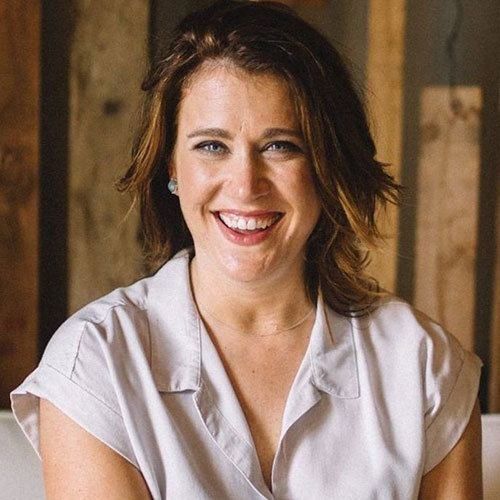
"Nicklaus was absolutely fantastic to work with. He completely transformed our website for The CPG Co-Op, and the end result is better than I could have imagined. What really sets Nicklaus apart is that he’s not just a great designer—he has a deep understanding of the technical side of websites and the backend functionality that makes everything work. He was able to take a fairly complex project, handle the technical details seamlessly, and still make the entire process incredibly easy for me as someone who is, frankly, a total luddite when it comes to this stuff. He also built the site in a way that makes it incredibly easy for me to manage and make changes myself, which means we aren’t constantly paying someone every time we need to update something. That was a huge win for us. He was responsive, collaborative, incredibly fast, and genuinely cared about getting it right. I would highly recommend Nicklaus to anyone looking for someone who can bring the creative vision and the technical expertise to actually execute it. He made the whole process easy—and delivered a website we absolutely love."
EMILY KEALEY
FOUNDER // THE CPG CO-OP
ON THE CPG CO-OP

STRAIGHT ANSWERS
CAN YOU MAKE OUR EXISTING SITE WCAG 2.1 AA COMPLIANT?
We can audit it, tell you exactly what fails and how serious each finding is, and remediate. The honest caveat is that some sites are cheaper to rebuild than to fix — when the underlying markup fights accessibility at every turn, remediation becomes an endless patching exercise. We tell you which situation you are in before you commit budget.
WHAT ABOUT OUR PDF BACKLOG?
It is usually the largest single accessibility liability and the one most proposals quietly leave out. We inventory the documents, identify which are still load-bearing, and work through converting the ones that matter to accessible HTML — which is almost always better than remediating a PDF that should never have been a PDF.
WE HAVE DOZENS OF PEOPLE WHO NEED TO EDIT PAGES. CAN THAT WORK?
Yes, if the system is designed for it. Roles scoped to sections, review workflow where it matters, and a component library that constrains what an editor can produce. Distributed publishing fails when editors are handed a blank rich-text box and a training session, which is what most institutional CMS rollouts amount to.
CAN YOU INTEGRATE WITH OUR SIS OR LMS?
Usually. Banner, PowerSchool, Canvas, Blackboard and most modern platforms expose something workable. We establish exactly what is available during scoping, and we design so student data stays in the system of record rather than being copied onto the public site.
CAN YOU WORK AROUND OUR ACADEMIC CALENDAR?
We plan to it. Nothing ships into the first week of term or an application deadline, and content freezes are agreed in advance. The calendar is the most predictable constraint in the entire project — building around it is simply a matter of choosing to.
DO YOU WORK WITH EDUCATION TECHNOLOGY COMPANIES TOO?
Yes. Ed-tech sits in the same constraint set from the other side: the marketing site is straightforward, and the real work is in the accessibility posture your institutional buyers will diligence, and the documentation their procurement process demands. Institutions increasingly ask for evidence, not assurances.
SEND US THE URL AND ONE PDF.
Give us your site and a document you publish regularly. We will come back with what fails WCAG 2.1 AA today and how serious it is — within 24 hours, findings yours either way.